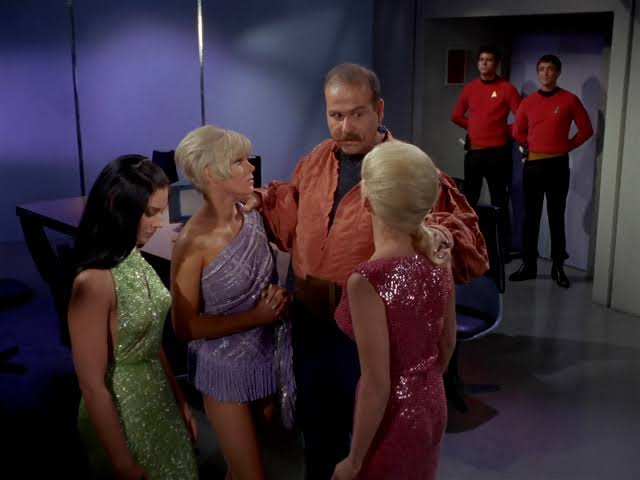
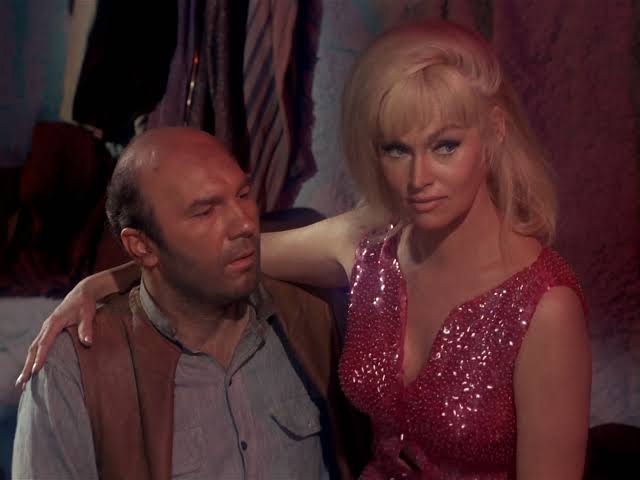
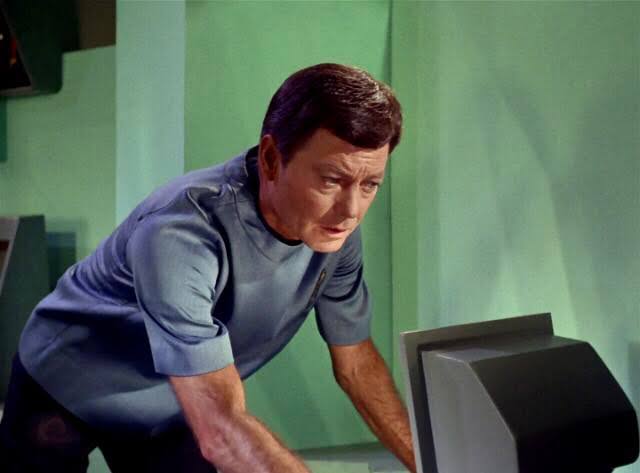
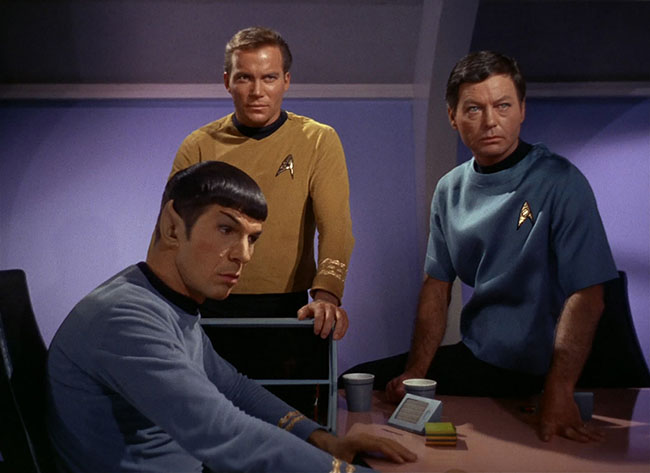
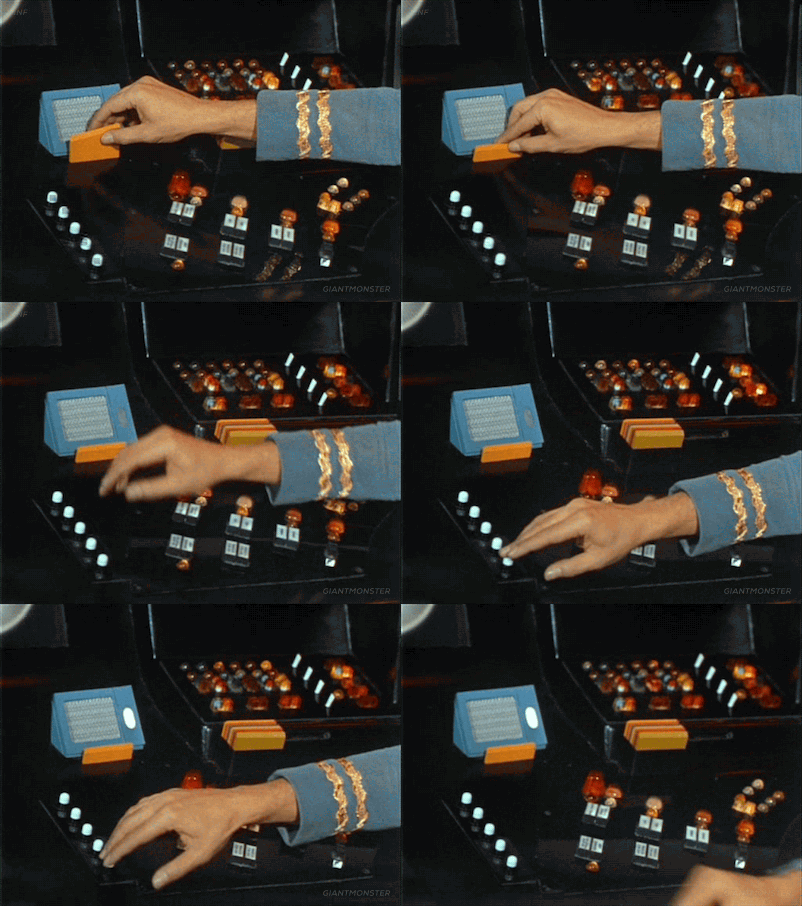
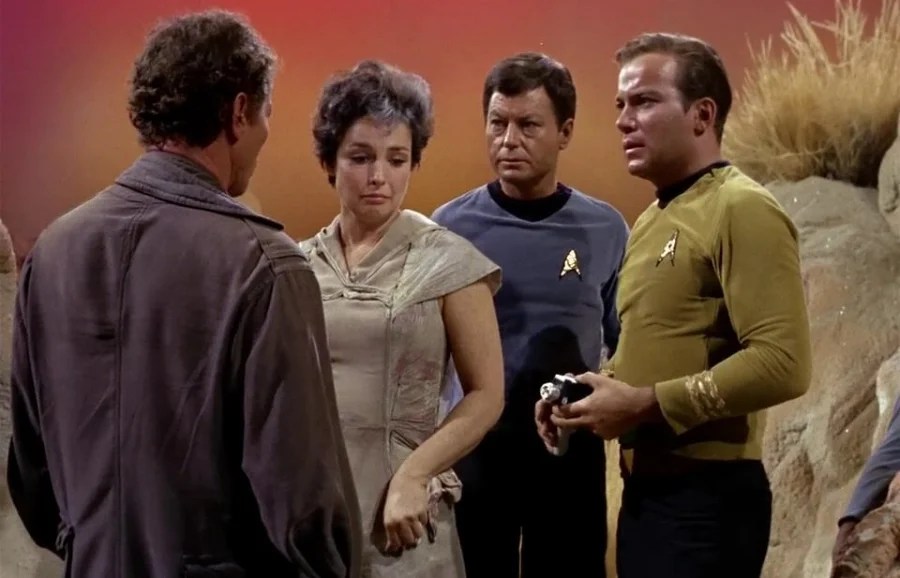
You don’t want wives, you want this. This is what you want, Mister Childress. I hope you remember it and dream about it, because you can’t have it. It’s not real! — Eve
It’s a good thing I started paying attention near the end of this episode, because I nearly wrote Mudd’s Women an unfairly scathing review.
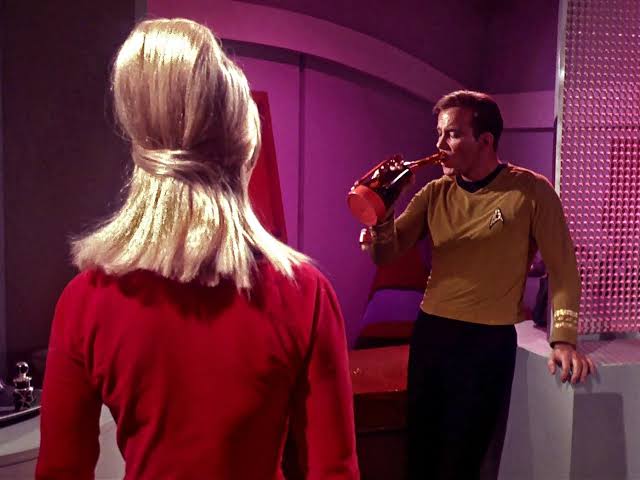
Yes, that’s right — I don’t like intergalactic con artist Harry Mudd, or at least the episode that introduces him. So sue me, but it instinctively grinds my gears that shows up with three bought women whose entire narrative purpose seems to revolve around seducing the male cast.
Only in the episode’s final minutes does the message reveal itself: women are more than their appearances, and the men who’ve brought these mail-order brides halfway across the galaxy are wrong to treat them like sex objects.
Unfortunately, this ethos is undercut by the assumption that women, while worth more than their bodies, naturally exercise that worth through their labor as men’s wives.
As Eve says, the head miner, Ben Childress, isn’t looking for “someone to help you, not a wife to cook and sew and cry and need.” Hot take, but I think women can do more than cook and sew and cry and need anyway, and they don’t need a man to do any of it.
The death knell to this story’s integrity is its nonsensical conclusion. Obviously, we the audience can see that the only difference between this supposedly-ugly broad and her beautified self is a little stage makeup, but Eve doesn’t even have that when Kirk claims she takes a placebo pill! While I agree with Kirk — you either believe in yourself or don’t — I don’t believe a placebo pill can jumpstart a magical girl transformation.
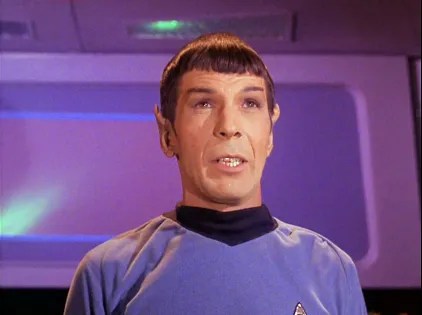
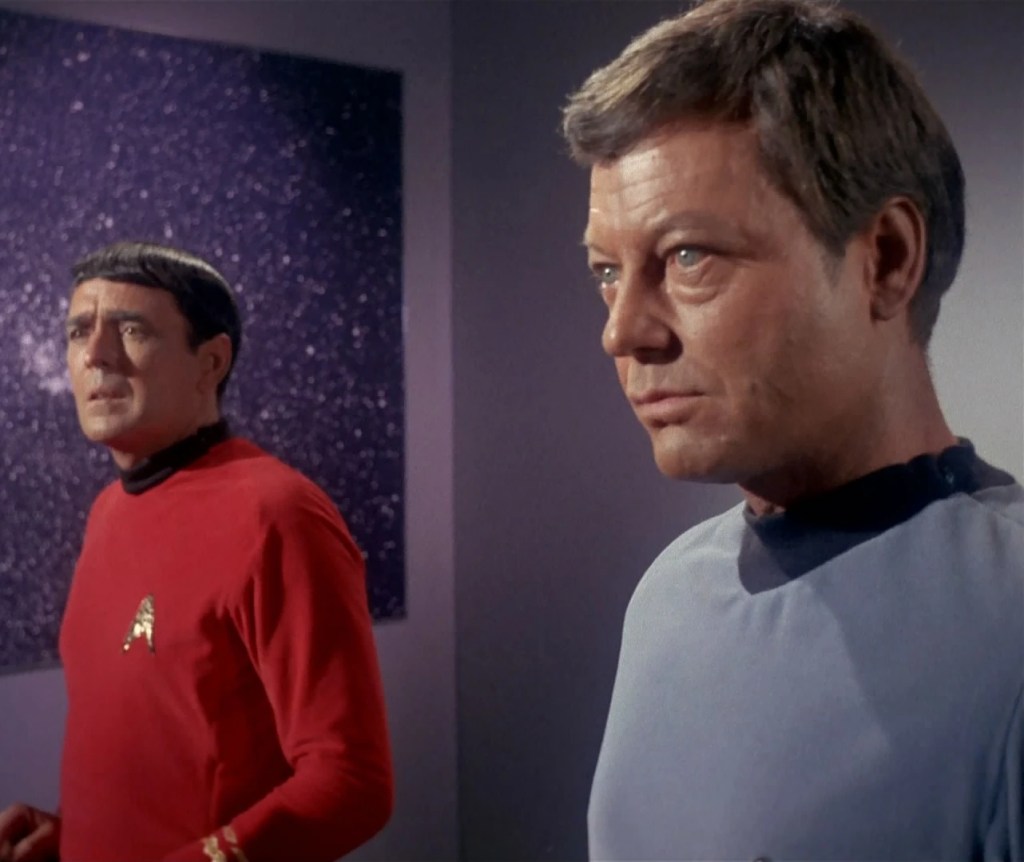
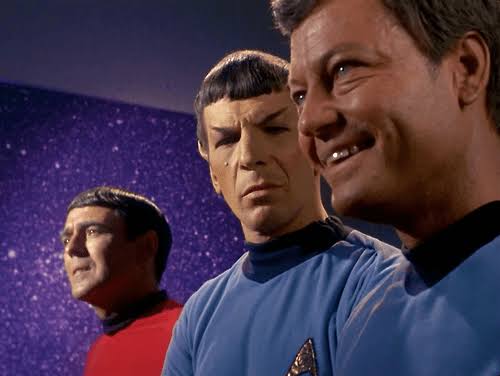
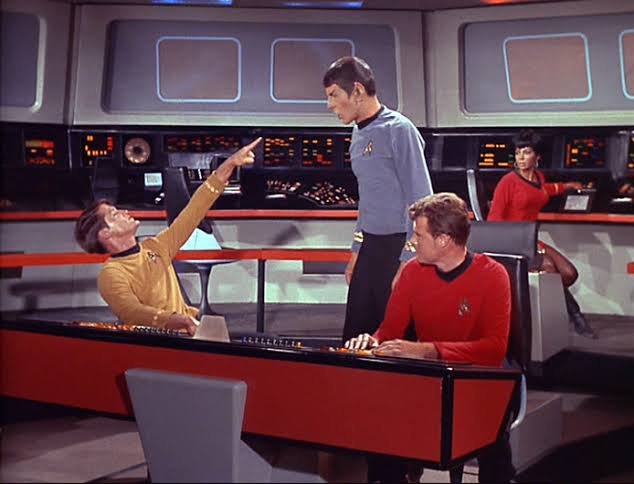
Also, just look to Bones’ high hairline and you can really tell Mudd’s Women was filmed third, after the second pilot and The Corbomite Maneuver. Spock has never looked less attractive. Eugh. Bold of him to be throwing shade at Bones for, as far as I can tell, correctly identifying the location of the Vulcan heart.
(And before you say Bones started it, he was gently teasing at most, and directing it at himself too!)
Good Doctor: II Bad Doctor: II No Doctor: I
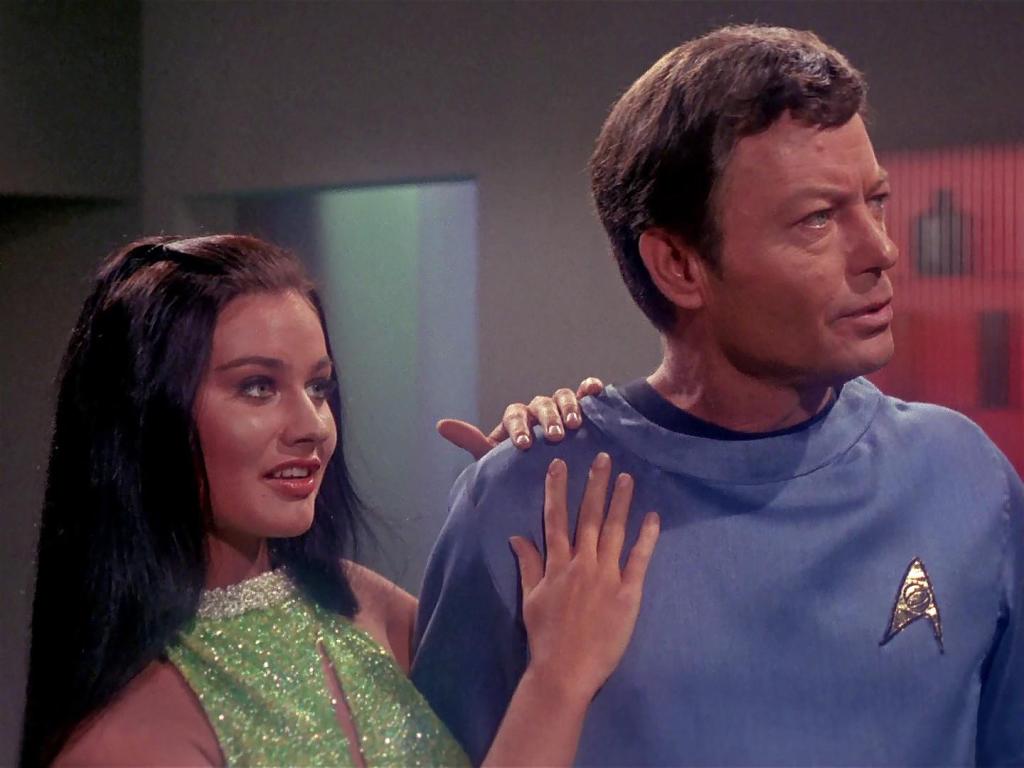
Finally another Good Doctor Bones episode, deemed thus for the scene where his medical instincts pulls him out of Ruth’s mystical allure. Vindication for The Man Trap!
Other viewers might object to his lecherous grin, but the only thing I object to is him not looking at me like that.
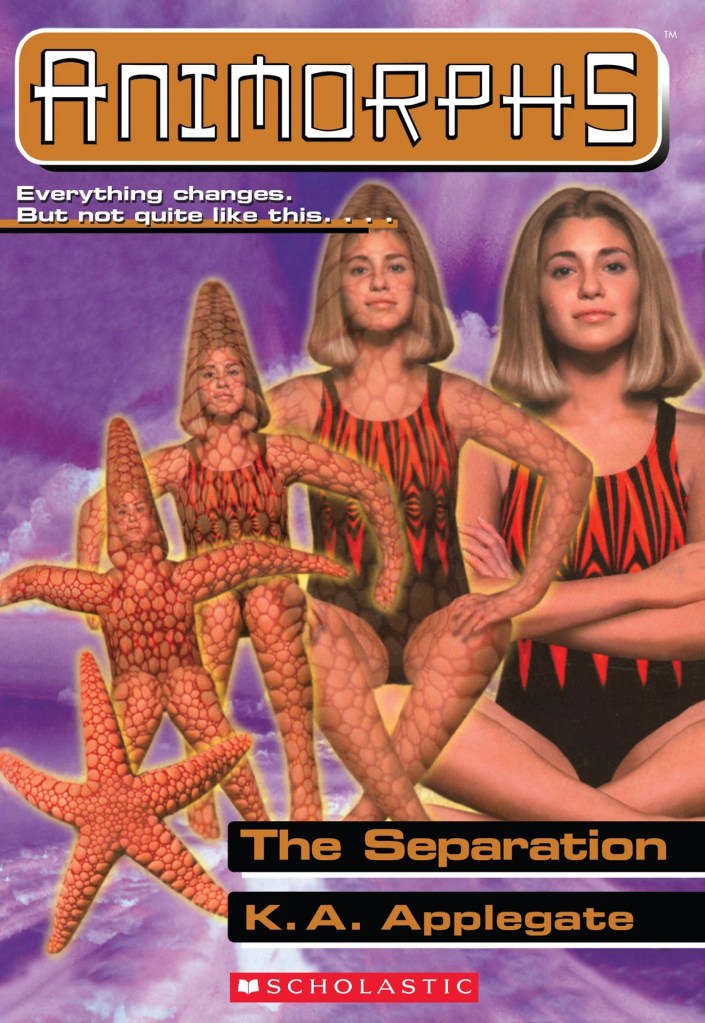
Someday, it will probably cease to amaze me that Animorphs cribbed a whole Star Trek plot. Say Dr. Jekyll and Mr. Hide did it first if you really you want to, but let’s be honest about where Animorphs #32— the one where Rachel gets split in half as a starfish and develops a good and bad half — is really coming from.
I’m fine with that, though. At least The Separation doesn’t have its main characters dismiss sexual assault in the workplace (I assume; I’ll admit that it’s been a while since I read it, although that would be a pretty wild change of pace for a children’s series).
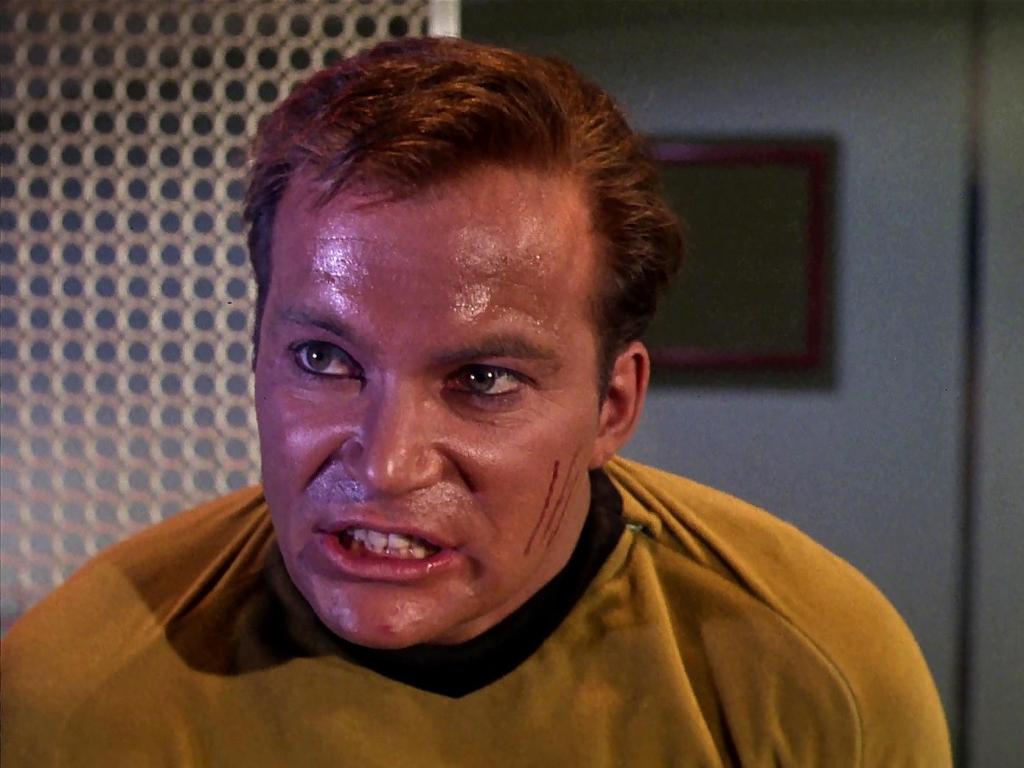
If not for the Janice Rand subplot — which so helpfully ends with us finding out she actually liked the evil Kirk coming onto her the whole time! — The Enemy Within would be a great episode. It’s campy; it’s well-written; it’s dramatic; it’s got actual Sulu content (even if that’s mostly him pretending to shiver in sunny California).
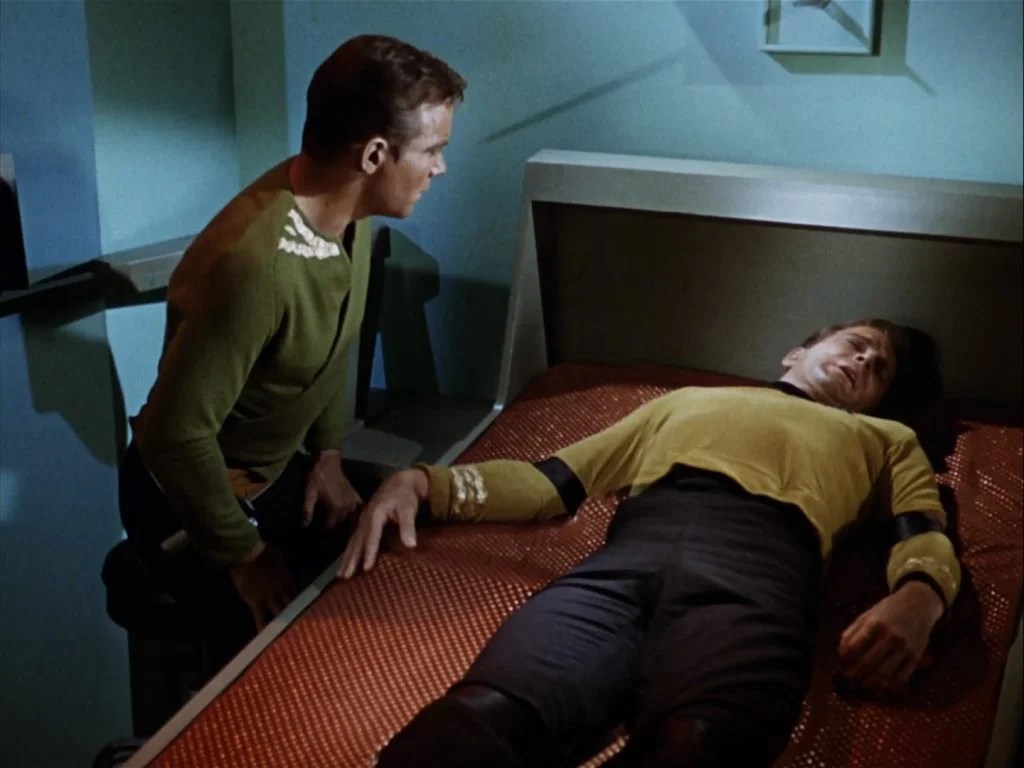
Kirk splitting into two halves, each with their positives and negatives, is a compelling concept turned into great drama by Bill Shatner at his most unhinged — and that’s not a bad thing! Also, he’s sans girdle and I like looking at his wide chest. There’s a great Kirk smile or two hiding in here, too.
There are some great character moments hiding around the big upsetting plot beat, too.
The crewman who stands up for Janice — meeting his own Captain in the eyes and telling him that he knows what he did — is an attempt to show that men should stand up for women, not each other, a great scene that’s unfortunately drowned out by the men who do stick together.
Taken as a character moment, though, when Kirk is accused of assaulting Rand, Spock’s response that there can be only one solution — an imposter — is such a strong affirmation of the Kirk and Spock friendship. In the real world, this boys club blanket protection would be quite troubling, but taken at face value, you can really see how much it means to Kirk, who has no idea what’s going on or why the world has turn on him, to have Spock’s support. (Also, this is one of several times that, for all its progressive politics, Kirk is victimized as as an embodiment of male fears about women in the workplace).
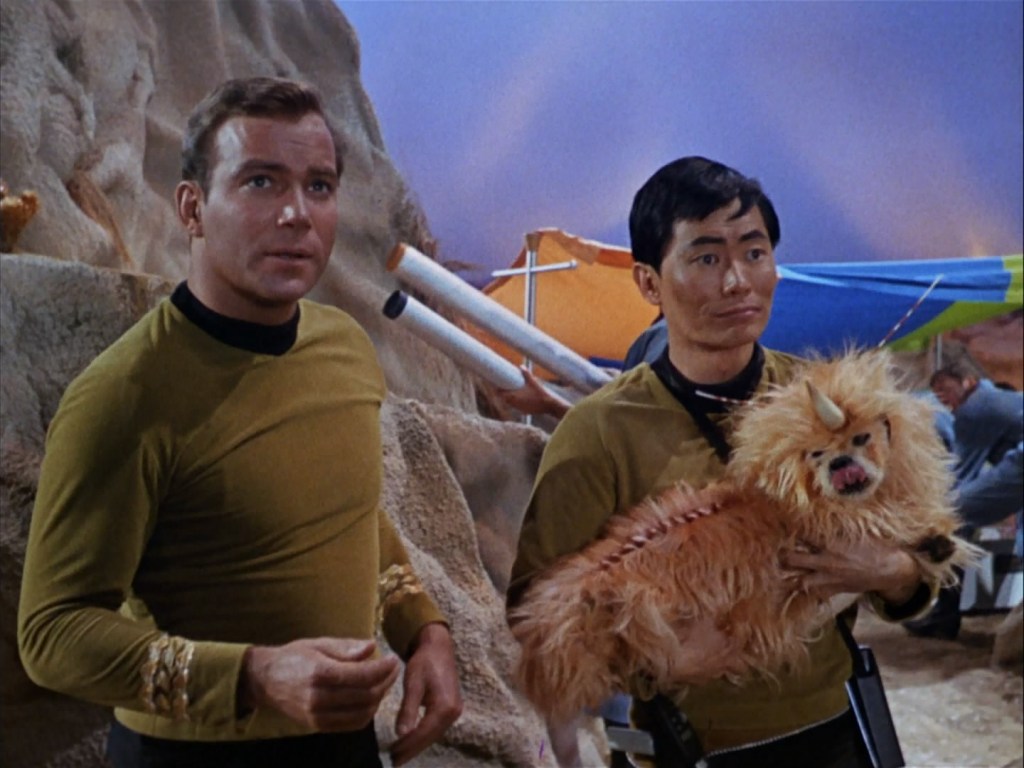
As for Bones, well — his haircut isn’t great, and his scrubs still don’t fit, but I’m just glad he’s here, in the episode mostly known for introducing this dog-in-an-alien costume to the world:
Good Doctor: I Bad Doctor: II No Doctor: II
Unfortunately, Spock has to explain the basic idea of medical shock to our good Doctor McCoy, who also fails to perform an autopsy on a dog-in-an-alien costume.
Filk Recommendation: The Enemy Within by Leslie Fish & The Dehorn Crew
Time travel. Homoerotic subtext. Sulu brandishing a rapier. Spock crying about his mom. Scotty lasering through the bulkhead to free the bridge crew from (O’)Riley’s singing.
The Naked Time has everything.
When Spock and some guy — and there’s a reason his name is so forgettable — beam onto another ship, they find the whole crew dead in the strangest ways: frozen, it seems, while committing acts of hedonism so absolute that they disregarded even fear of the cold, unfeeling space looming beyond every wall.
It’s not long before what’s-his-name is feeling the space heebie-jeebies himself. Sweaty, unfriendly, and incoherent, the poor crewman who beamed aboard the doomed ship with Spock finds himself with even less will to live than the average doctoral student he resembles.
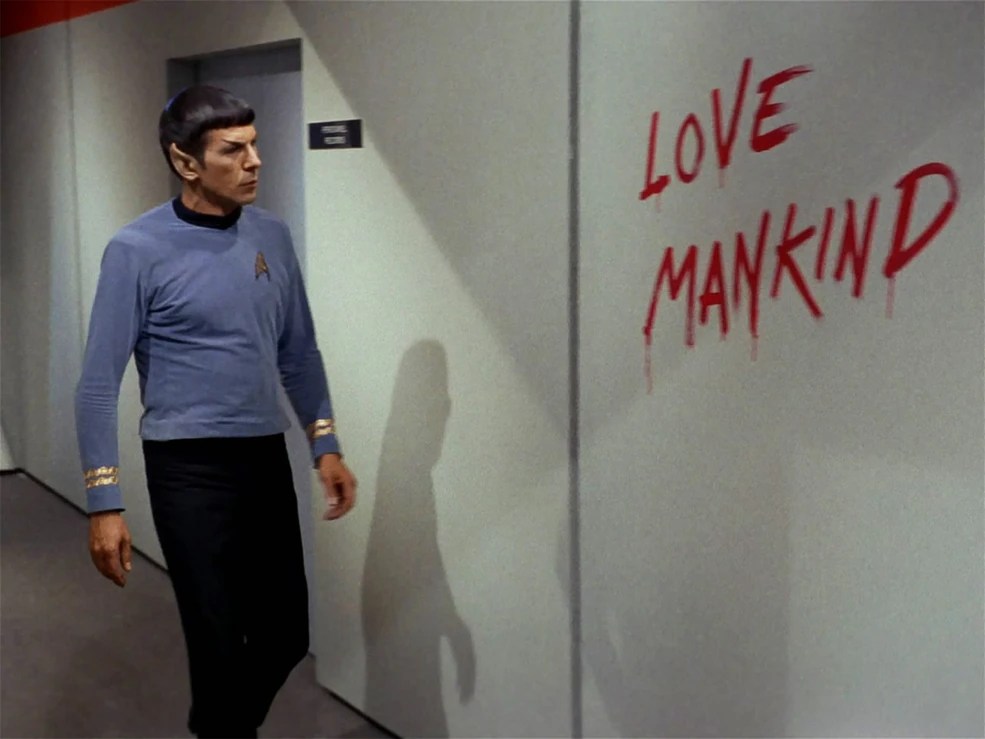
It’s not long before he’s dead and the whole crew is affected, some to comedic effect, some to deadly, and some, like our spray can-brandishing graffiti artist, to chilling.
The Naked Time is truly a masterclass in television sci-fi storytelling. John D. F. Black’s script makes proper pacing look like child’s play. Gliding from character to character, the episode never slows as each element comes together for a nail-biting climax.
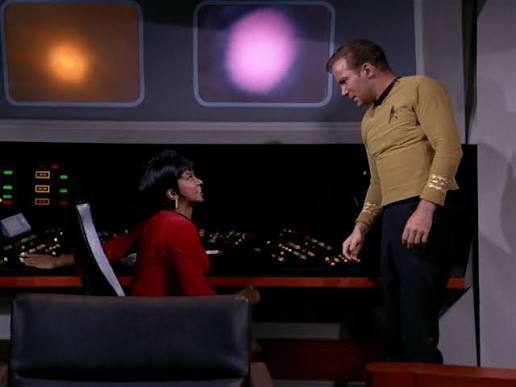
Take the scene where Kirk snaps at Uhura. Frustrated and hurt by his uncalled-for demand to stop Riley’s miserable musical renditions, she stops herself retort, remembering her duty as lieutenant to serve Captain Kirk — a duty that remains no matter how unkind he is. But even in the throes of his own frustration and his own fight against the disease destroying his ship, it’s not enough to just not punish her: Kirk meets her gaze and apologizes.
It’s a narrative-driven reminder that not everyone has succumbed to their base instincts; it’s another endless plea to watch the un-remastered version, which here especially softens the actors’ countenances; an implicit statement about our duty to each other no matter our race or rank; it’s an interaction, and those rapidly diminish as the show goes on for our secondary crew. When they do have lines, they’re in service to Trek technobabble; on a good day, they might get a pithy one-liner.
While the early show’s incongruities usually chafe at me like the strangely ill-fitting scrubs we see on Bones in this episode, not so here. From Spock and McCoy’s meticulously depicted scanners to the rec room set dressing, The Naked Time is trying to impress the viewer with an impression of its worldbuilding. Seeing Sulu and Uhura actually have lines and meaningful moments, I’m wistful for what should have been — their casual integration into the fabric of each storyline in a way that not only boosts their characters but aids the storytelling overall.
And we haven’t even talked about Kirk or Spock.
The Naked Time brings us our first glimpse of Nurse Chapel, already appearing in two of her many contradicting wigs in the same episode. What effect does this inhibition-loosening disease have on our third female character.
Naturally, the disease reveals that Chapel wants to…toy with her hair. And don’t worry: we also immediately learn that Chapel is deeply love with Spock. One of this episode’s many funny moments — such as every scene where Kirk reacts to Riley’s torturous delusions — includes her dazed line delivery in response to McCoy instructing her to watch Sulu. He pauses; he carries on.
More on that in a bit.
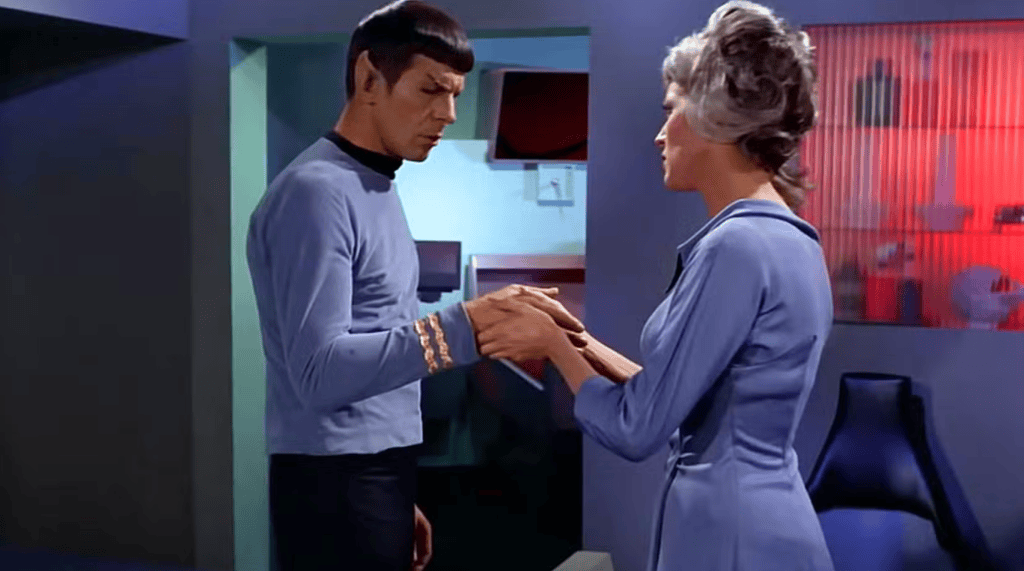
For now, The Naked Time picks up with a Spock who has finally affected by this mysterious disease. Chapel’s confession is the first of several moments where the narrative clearly means to lead us down a path to understanding Spock as repressing his natural urges to reciprocate the affection so sincerely expressed to him, but there is tension in this attempt.
Spock knows Chapel, but we, the audience, don’t. Why should Spock love her? He doesn’t confess to, after all. In trying to establish his emotional connection to Chapel, Black overreaches the burgeoning show’s authority. We see a confession; we see the pain it causes him, but we cannot take the show’s word for it as to why.
And so Spock stumbles across Kirk, who sacrifices his own grip on sanity to restore Spock’s — not before Spock, still reeling from Chapel’s words, that his friendship for Jim Kirk leaves him ashamed.
Time is running out; the ship will burn up in this mysterious planet’s atmosphere if Kirk doesn’t get Spock’s input on the cleverly compelling matter-antimatter solution he’s got cooking up (a wonderful character detail that reminds the audience that the Captain isn’t just a pretty face but conversant in every speciality needed to run the ship), they will all die. Spock talks about friendship; Kirk talks about love, and the way they talk about them is the same.
But it isn’t Kirk’s yeoman with the crazy hair that pulls him out of his funk. It’s the Enterprise, that space-faring lady who so commands his attention.
So, what’s Bones up to while Spock sobs and Kirk cries out for his real one true love? The good ol’ emotional Southern doctor must be worse off than anyone, right?
Actually, no.
Dr. McCoy is quite busy identifying, isolating, and developing a total cure for a condition he’d never seen before that morning. He might be a little brusque about it, but, then again, when isn’t he? And in his defence, he’s doing this completely on his own. Since the crew is off defacing the ship and pitching them all towards certain death, the cure he develops from scratch — starting from his scans on Sulu to the finished product less then twenty-eight minutes later —includes a race down to the biology lab.
What Bones does here is not only a feat of such magnitude that it raises him to the sphere of fantasy physicians like Tezuka’s Black Jack — it’s a fest made especially remarkable considering he’s doing it under the same disease everyone else has.
Because he does have the disease. Bones hasn’t avoided contact with the infected; he’s in more contact than anyone, since doctors don’t seem to need gloves anymore, even during surgery. In an early scene with Kirk, we even see him sweating profusely, one of the disease’s hallmarks.
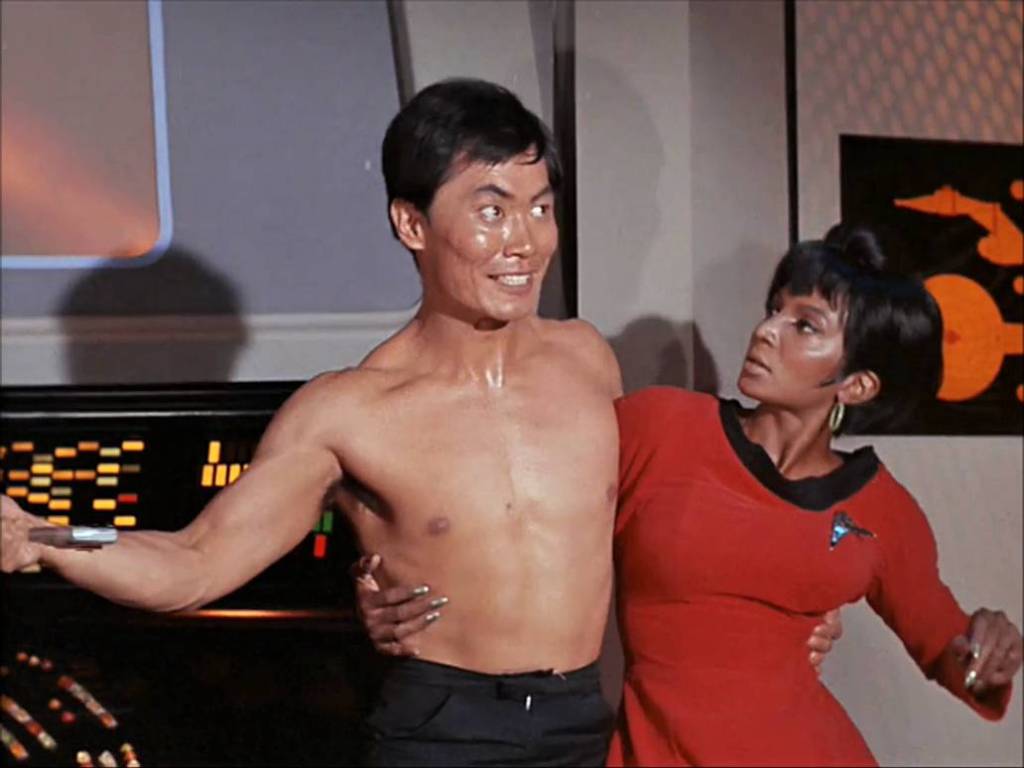
This isn’t a plot hole. After all, this disease doesn’t actually just make one crazy — it frees one to pursue their normally repressed desires at full tilt. Sulu fences; Rily proclaims the superiority of the Irish; Spock cries about the self he leaves behind.
As it turns out, Leonard McCoy is exactly who he says he is.
The disease just makes him even more of himself — more tenacious, more focused, and even more devoted to medicine. This doesn’t reduce the brilliance of his actions; his success is only possible because he already lives the life that makes him happiest. If he didn’t, he’d have been just as debilitated as the rest of the crew.
Four episodes in, and we may have already seen the greatest refutation of Spock’s logical way of living the Original Series has to give.
Now, does Bones finding a cure actually…do anything?
In the long run, yes. There won’t be any more O’Rileys running about the place; no more Sulus jumping out at you in the halls. But Kirk did already remember how in love with his ship he is, so it doesn’t actually save the day.
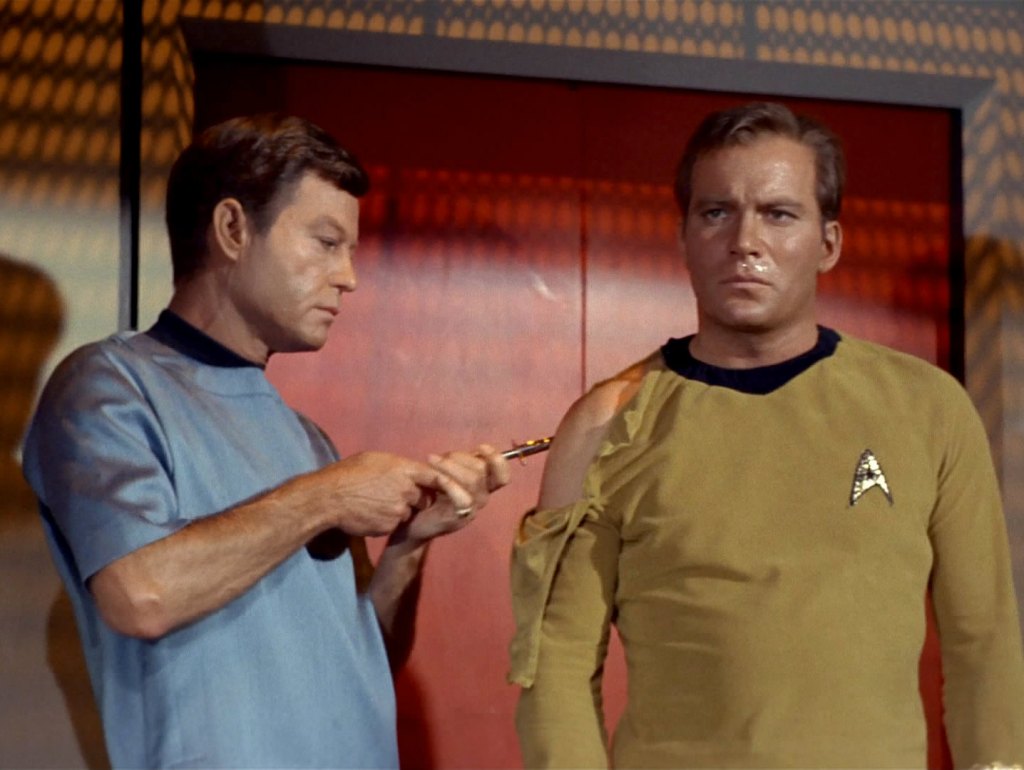
The cure does, however, let Bones tear Kirk’s shirt off at the shoulder — and the only reason to do it that way was because he wants to.
Love wins.
Or should I say mankind?
Good Doctor: I Bad Doctor: I No Doctor: II
Finally, a Good Doctor Bones episode! One of the very best, even. While he does lose a patient early on, this is one of the few episodes where we actually get to see Bones operate, even if it does mostly look like him a series of eclectic sonic screwdrivers on the patient.
Also, everything I said up there.
Filk Recommendation: Kathleen by Cynthia McQuillin. Performed by Larry Warner.
(I heard this song for the first time while driving on a long, winding Kentucky road in the dark, and it jolted me right out of a late night stupor. Thank you, Filkcast!)
P.S. I like Kirk’s little microtapes. They look like Game Boy Color cartridges.
Robert Walker Jr. as Charlie Evans in the STAR TREK episode, “Charlie X.” Season 1, Episode 2. Original air date September 15, 1966.
It was with great aplomb that my friends and I turned on Pluto’s Star Trek channel some months ago. Our out-of-town friend Jacob hadn’t seen most of the original series, and so, fuelled by the joy of recreating the mystery of syndication, we waited on tenterhooks to find out what we’d be watching.
Alas, it was Charlie X.
Upon seeing poor Robert Walker’s visage, Jacob — who had heard us complain about this episode all weekend — cried out, “Wait! I’ve seen this episode!”
We laughed. We cried. We turned Charlie X off.
(Actually, I was in the bathroom during this. But I certainly heard the roar of laughter at Jacob’s response, and my friends were still reeling on my return.)
But why such vitriol for Charlie X?
Even then, I felt some uncomfortable itch reminding me that there’s more to Charlie X than the bug-eyed boy it’s named after.
Supposedly raised on his own after crash landing on an alien planet, the teenage Charlie joins the Enterprise as a passenger on his way back to a human colony. When it turns out that Charlie has telepathic powers, his adolescent urges prove far more damaging than your average 17-year-old.
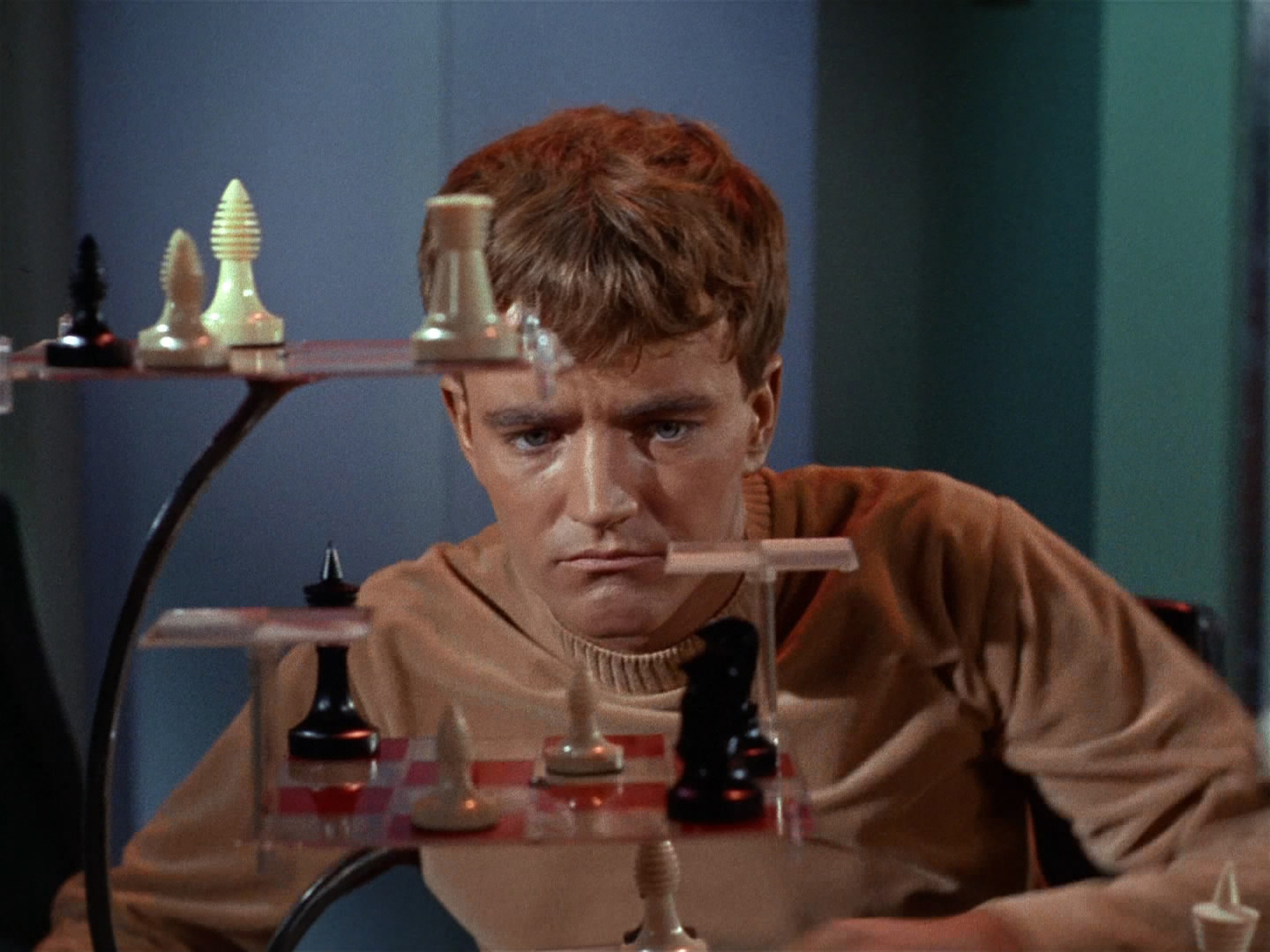
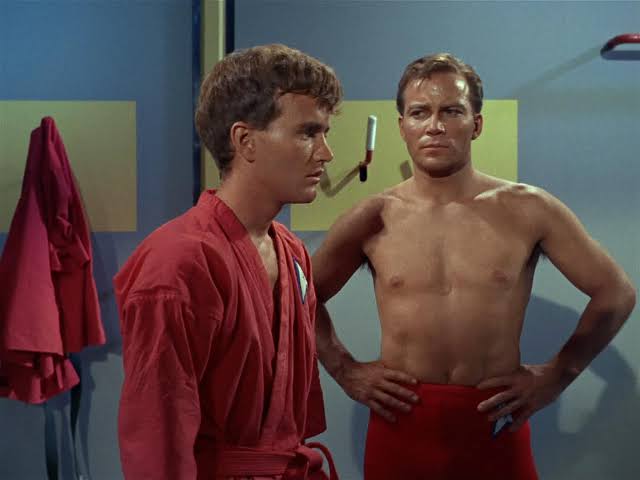
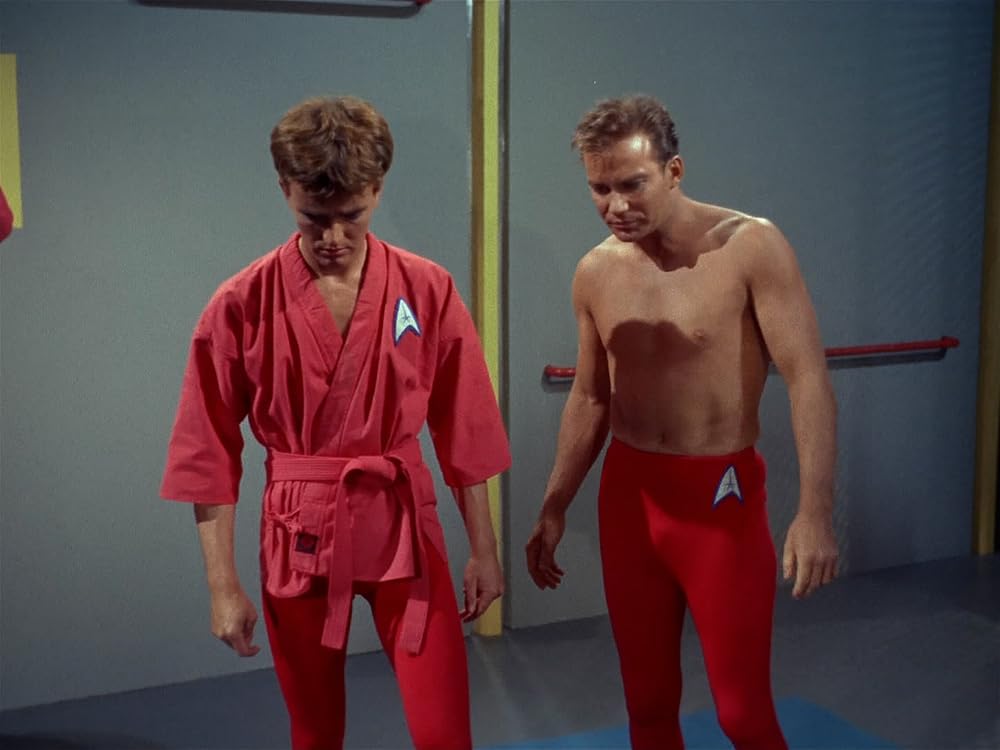
When I asked myself what I don’t like about Charlie X, my first thought was that is that it has pacing issues with that glacial opening, but actually, I don’t think that’s even true. The first half of the episode introduces so many great concepts: Spocks’ lyre, Kirk’s red leggings, the return of the chess set, Kirk’s red leggings, Janice Rand’s all-pink quarters, Kirk’s red leggings—
Robert Walker Jr. as Charlie Evans in the STAR TREK episode, “Charlie X.” Season 1, Episode, 2. Original air date September 15, 1966.
Truthfully: I think there’s just too much Charlie.
I just don’t want the central cast taking a backseat to Charlie’s point of view, of all people. As the episode goes out of its way to make clear, he’s just not that pleasant to be around.
I mean, I also don’t like Uhura’s singing — even when it’s not a strangely xenophobic tune about what aliens might do to female astronauts. I do wish we got to see more of the crew hanging out (without bullying Spock), though. (And also….shirtless Kirk in those red leggings.)
From Bones’ too-large scrubs and too-short hair to Spock’s characterization (methinks he doth protest too little to getting his legs broken!) to plot elements that don’t quite gel (unlike Kirk’s hair, which can’t stop), there’s a not-quite-settled feeling pervading the episode. It’s clear that Spock and Bones haven’t been conceived as rivals yet; they move almost in unison throughout the episode. They turn to Kirk at the same time; they stand parallel to each other, heads lining perfectly.
But while I never quite feel at home watching it, Charlie X has some of the best visual moments of the series.
You can tell that the production team went all out on this one; after all, this episode was used to sell the series to all those Nielson-approved viewers. The moment where Charlie silences crew members laughing by erasing their faces is genuinely chilling. The blocking is painstakingly intentional; the lighting is shamelessly dramatic. Perhaps my reticence towards it comes in part from an eager over-intentionality; while life on the Enterprise may always seem hyperreal, there’s an element of Charlie X that feels even more staged than usual.
But that ending! The tragedy of this boy’s terrible, ostensibly unavoidable suffering comes through so strongly even after all the suffering he’s inflicted on others. Much has rightfully been made of Kirk’s humanistic approach to wooing women in this episode, but for me, it’s Kirk’s decision to defend Charlie one last time — even as he struggles to believe his own words on defence and rehabilitation — where we first get the mettle of this Captain Kirk of the Starship Enterprise.
So, all in all — it’s a damn fine episode of Star Trek.
Doctor Rating:
Sadly, Bones doesn’t do enough doctoring in this episode to rank in either direction. Sure, he says some jargon, but he could have done more. Thankfully, he could also have done less, so N/D for this one.
Good Doctor: Bad Doctor: I No Doctor: I
P.S. You know that shot when Kirk is standing on the Enterprise, and Bones just sidles in out of nowhere, with Spock close behind?
It’s just right.
Filk Recommendation: Charlie by Kathy Mar (lyrics) and Brenda Sinclair Sutton. Performed by Tera Mitchel, Mary Creasey, and Sandra Kleinschmidt
Sixty years ago today, The Man Trap aired on primetime television.
As far as ratings go, Star Trek wouldn’t break the top 30. Other shows with that ignoble dishonor include Love on a Rooftop (a sitcom about a newlywed couple struggling to survive in San Francisco on an apprentice architect’s salary), The Monroes (a Western about five orphans surviving on the frontier), and The Rounders (another sitcom, this time about a New York bachelor who coaxes a hat check girl to pose as his wife for work parties).
Mostly, everyone was watching Bewitched.
Truth be told, looking at those shows doesn’t tell me how mind-melting Star Trek would have felt at that time. The Beverly Hillbillies; The Red Skelton Hour; The Lucy Show; Bonanza. Before Trekkies succumb to any narratives that Star Trek completely blew the rest of television programming out of the water, many of its competitors (including direct ones — there’s a reason everyone was watching Bewitched!) left lasting legacies that continue to reverberate today.
Star Trek’s legacy is that it did all that with bad ratings. Fans loved Trek so much, they kept it going for two more seasons.
Or maybe it’s enough to say this: Bonanza doesn’t have a default emoji.
As for The Man Trap itself, it’s a great opening episode. I’m not a big fan of Trek’s first five or so episodes, so I have no complaints with moving this episode up in the release order. The actors are clearly comfortable with each other; the set and costume designs are settling into their long-term appearances; there’s a confidence that welcomes viewers in. DeForest Kelley is in dangerously fine mettle here — I say dangerous because I love Bones, and this episode is setting a frankly unreasonable precedent for expecting Bones’ inner turmoil to recur on an at least somewhat regular basis.
I’m sure this won’t be the last time I say this, but the original, unremastered version is the way to go. If you have the means — either by owning the Blurays, watching through a Paramount Plus subscription specifically purchased through Amazon Prime (yes, seriously), or by sailing the seven seas — watch it without the remaster. No, you can’t see their shiny, porous faces, but you also can’t see the sweat from the blazing studio lights or the fibers on props that were never meant to be seen. The colors look better and so do the characters — not to mention the incredible contrasting lighting inherited from the only-just-bygone black-and-white tv lighting era is truly enhanced by the original cut.
Speaking of characters, one of the best (and most acutely missed) parts of this episode is seeing how much screen time characters like Sulu and Uhura (and Rand, but unfortunately while I have nothing against the actress, I’ve never been a fan of Rand or her hair) have. Their banter is such a fun and valuable addition, and I wish that hadn’t faded away in favor of the extremely heavy focus on the triumvirate…even if I love the extremely heavy focus on the triumvirate.
I could go on, but that’s enough for now, I think. It’s been a long, long day, so if I spent a little more time on my phone than I’d have liked for Star Trek Day, that’s okay. I was talking about Star Trek anyway.
Doctor Rating:
Unfortunately, Kirk is right: Bones indeed spends too much time mooning over his long-lost Crater. At least he looks damn good in that black undershirt while he’s doing it.
Good Doctor: Bad Doctor: I
P.S. What did Kirk mean when he said mysteries give him a bellyache?